Tag: CO2
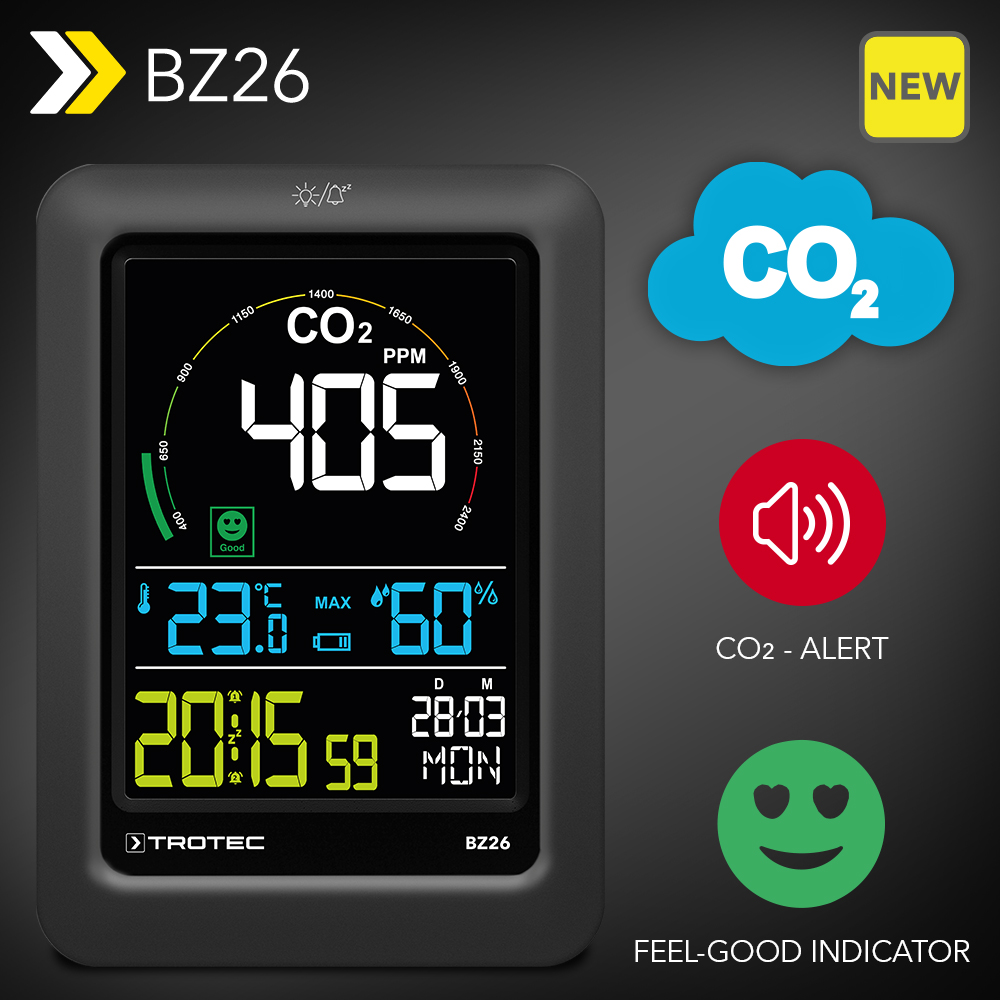 As soon as winter arrives with its freezing cold weather, discussions start in the office, in the workshop, in schools and in day care centres. Because a high density of people in a room also causes a high concentration of carbon dioxide (CO2) in the room air. The question arises again during the cold season: how often should, indeed, must the windows be opened for ventilation? In recent years, the debate about opening cycles has been dominated by the risk of corona infection. And this year, the expensive energy prices are once again intensifying the dispute between the ‘window-closed’ and ‘window-open’ factions. So here is Trotec’s suggestion for pacification: The CO2 Air Quality Monitor BZ26. Finally available!
From vision to innovation: a CO₂-neutral logistics and production center from Trotec is being built in Heinsberg
Posted on by Jochem Weingartz
 It all started with a vision: climate neutrality.
Europe is to be climate neutral by 2050. This can only be achieved if as many companies, people and governments as possible see the fight against climate change as a team effort. Acting together in the interest of climate protection, but never losing sight of personal responsibility. With this guiding principle in mind, Trotec already set itself ambitious goals when planning the new state-of-the-art logistics and production center in Heinsberg. Climate neutrality by the year 2023. To achieve this, CO₂ emissions in production and logistics will be reduced to a minimum and the ecological footprint significantly reduced. In addition, Trotec supports numerous measures at home and abroad that contribute to reducing the emission of carbon dioxide (CO2) or other greenhouse gases.
CO₂ Air Quality Monitor BZ26: reliable monitoring of air quality using the ‘CO₂ traffic light’ and acoustic warning signal – can be used as a corona protection measure
Posted on by Jochem Weingartz
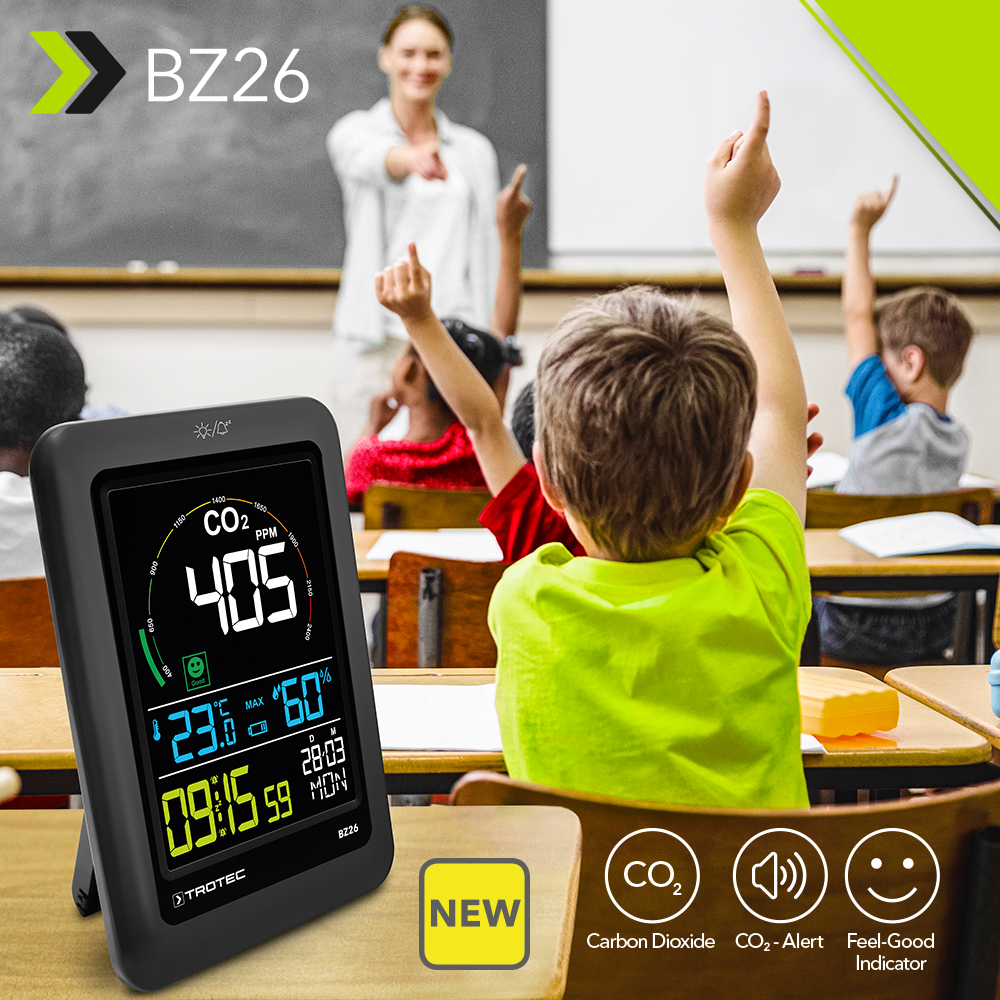 With regard to airborne infection with corona viruses, timely ventilation in schools and kindergartens as well as in office and production environments is part of a functioning hygiene concept. But when do we need to ventilate? And how long should windows remain open? Because uncontrolled ventilation leads to a waste of energy and can be quite expensive, it is advisable to keep an eye on the most important air quality parameters for our well-being, such as the CO₂ concentration, the indoor temperature and the relative humidity with the CO₂ air quality monitor BZ26.
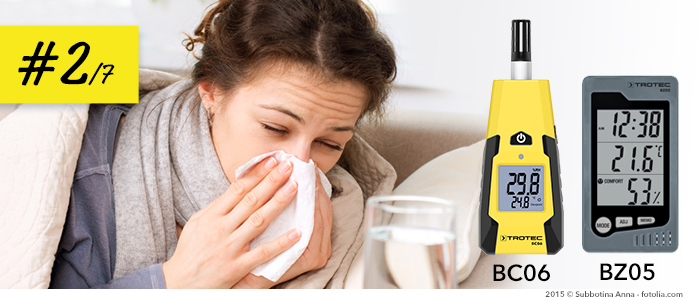
Trotec practical knowledge: Tips for a better indoor climate 2/7 – How to ventilate your room correctly and sustainably
Posted on by Jochem Weingartz
 Rarely has there been so much talk about ‘ventilation’ as in the past and current year. No wonder, since the exchange of air in rooms was and still is considered a tried and tested means against potential corona virus load caused by infectious aerosols. So far, there is no measuring device that is able to prove the contamination of indoor air by SARS-CoV-2. However, it is possible to determine a necessary ventilation interval via the ‘detour’ of a permanent measurement of CO2 values. Because the more people are in living rooms, office spaces, production rooms, schools and daycare centres, the more the exhaled carbon dioxide level increases – to the point of a CO2 alarm: time to open all the windows!
BZ30 CO₂ Air Quality Data Logger: ‘CO₂ traffic light’ and acoustic warning signal indicate when ventilation is needed in cold rooms.
Posted on by Jochem Weingartz
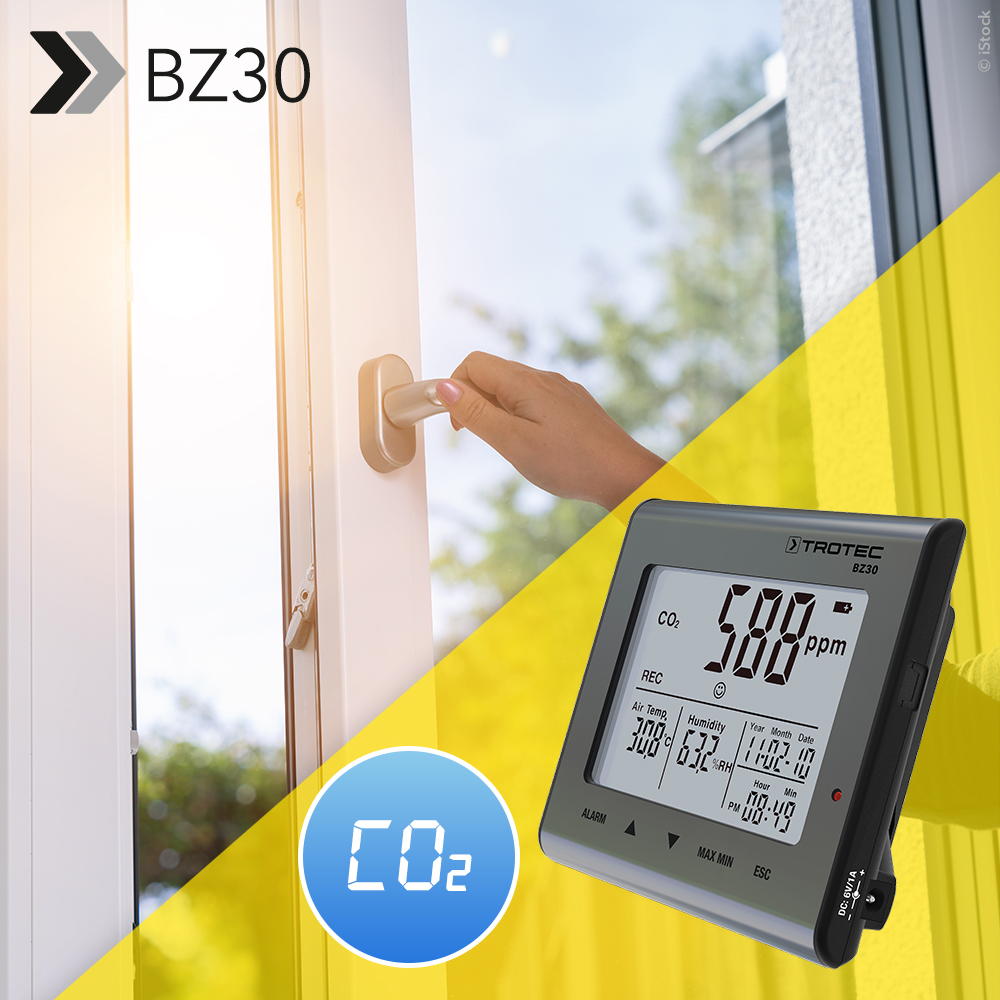 As advised by renowned epidemiologists, consistent ventilation of rooms helps to minimise the risk of corona virus infection. The BZ30 CO₂ air quality data logger, which is finally available again, provides a reliable indication of when it is time to open wide windows and doors in schools and offices. Like a CO₂ traffic light, the device shows the current CO₂ concentration at a glance and thus also demonstrates the potentially increased risk of infection due to a lack of fresh air. It also warns the user with an unmissable acoustic signal.
BZ25 CO₂ Air Quality Monitor: reliable measurement of indoor air quality including a ‘’CO₂ traffic light’’ and an acoustic warning signal.
Posted on by Jochem Weingartz
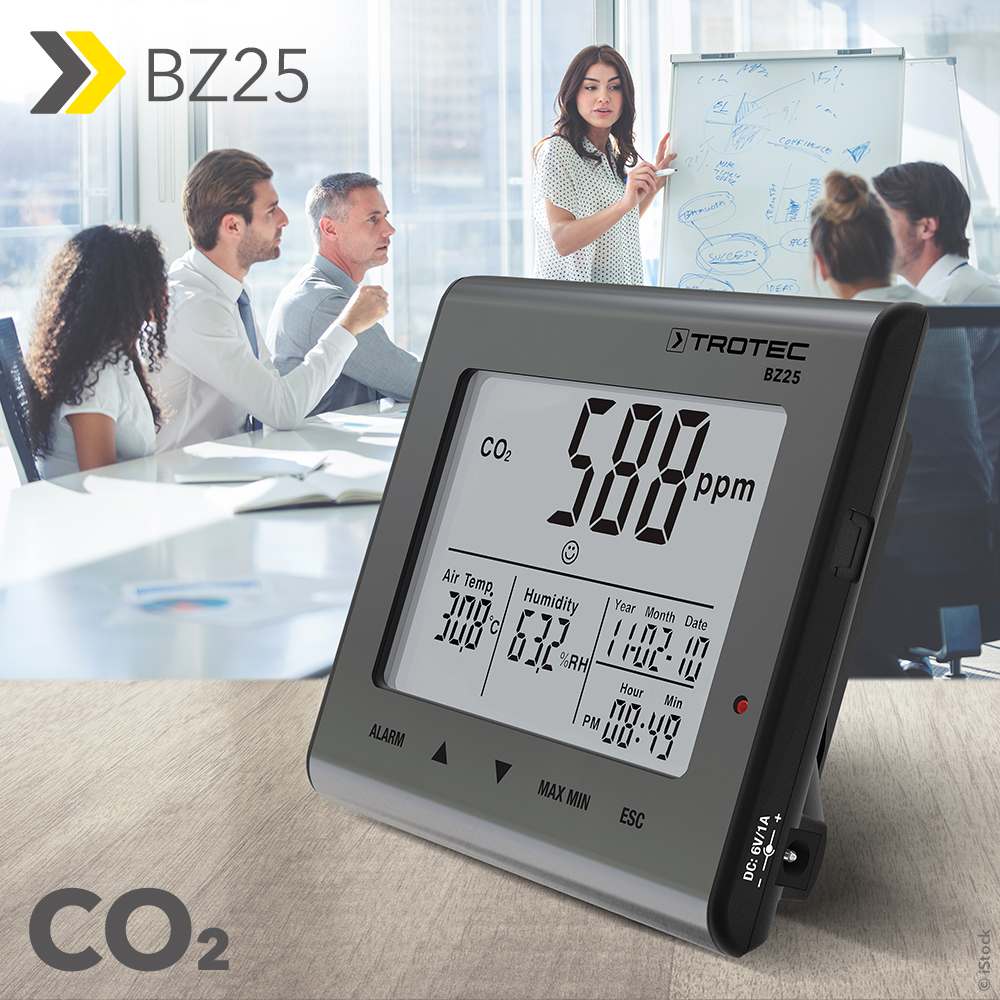 Increased carbon dioxide concentrations can lead to fatigue, poor concentration and loss of performance. In addition, they are a warning of possibly inadequate ventilation management, which always means a potentially increased risk of infection during corona times. With the BZ25, indoor air quality can be monitored reliably and particularly easily, because the air quality monitor has a symbol display for good, normal or poor carbon dioxide concentration. Ideal for use in offices, living- and children’s -rooms, classrooms, kindergartens and production environments.
BZ30 CO₂ air quality data logger – for autonomous long-term logging of carbon dioxide concentration, room temperature and humidity
Posted on by Jochem Weingartz
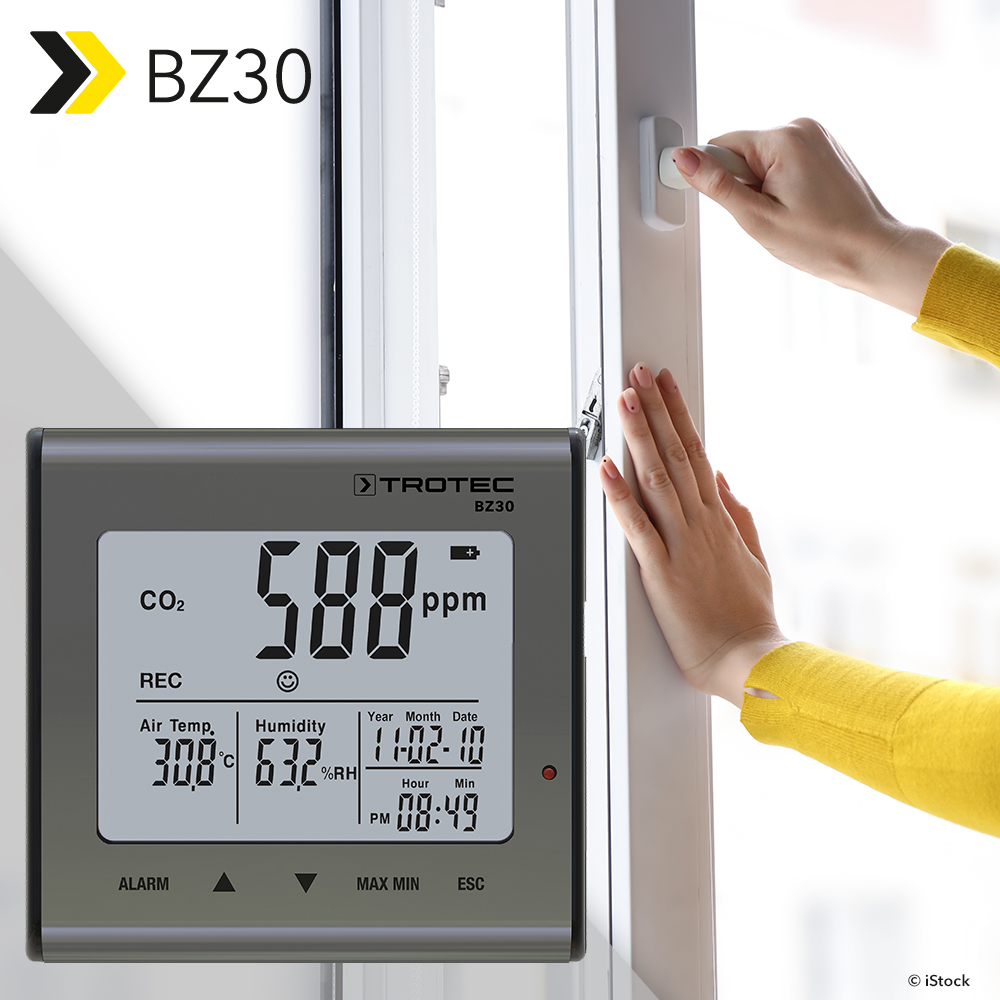 Pandemic and infection alarms are going off everywhere you look – how often can, should or must classrooms, waiting rooms and meeting rooms be ventilated? An recommendation often heard is about every 20 minutes. But is that really enough? Is that too little ventilation, too much or just right? The BZ30 CO₂ air quality data logger delivers clarity here, because its alarm function warns you if it detects an increased concentration of CO₂. Schools, offices and private households thereby receive an indication of potentially inadequate ventilation management, which brings with it a potentially increased risk of infection.
“Bad air leads to sickness” – humidity and temperature
Posted on by Jochem Weingartz